Roll a squad
Every turn gives you one national team and one World Cup year. The draw can be a champion, an underdog, or a strange squad that forces a decision.

Tournament run
Group stage
Final result
You finished the run.
Run highlight
vs Ireland 2002
Local records
Records are saved only in this browser on this device.
Mode help
Classic shows player strength clearly, so it is the faster World Cup squad builder mode. Use it if you want a more readable football draft game and quicker simulation runs.
Almanac hides ratings. You still draw real World Cup teams and years, but now your choices depend more on memory, tournament knowledge, and football instinct.
Both modes use the same historic World Cup player pool, formation choices, and tournament simulator. The difference is how much information you get before you pick.
How to play
Start a 7a0 run in seconds: roll a World Cup squad, take one useful player, and see whether your XI survives the tournament.
Every turn gives you one national team and one World Cup year. The draw can be a champion, an underdog, or a strange squad that forces a decision.
Choose the player who helps your XI now. Famous names are tempting, but open positions, role fit, and balance decide the draft.
When all eleven slots are filled, the simulator tests your rating, attack, defense, balance, fit, and tournament luck.
7a0 is a World Cup game for people who enjoy making football decisions under pressure. You start with a formation, roll a real national team and a real World Cup year, then choose from that squad to build an XI that has to survive a tournament run. If you like a football draft game, a World Cup squad builder, or a lightweight World Cup simulator, this is where those ideas meet. The game is fast to start, but the interesting part is what happens after the first few picks. Every selection changes the shape of the team and closes or opens different paths for the rest of the run.
A proper build a World Cup XI challenge has to care about structure. A glamorous forward line can still fail if the midfield cannot connect play or the defense never settles. A quieter pick can sometimes raise the whole team because it fixes role balance, protects a weak zone, or gives your lineup a spine. That is why the game works better as a squad-building problem than as pure trivia. You are not simply naming legends. You are trying to build a football team that can actually function over multiple matches.
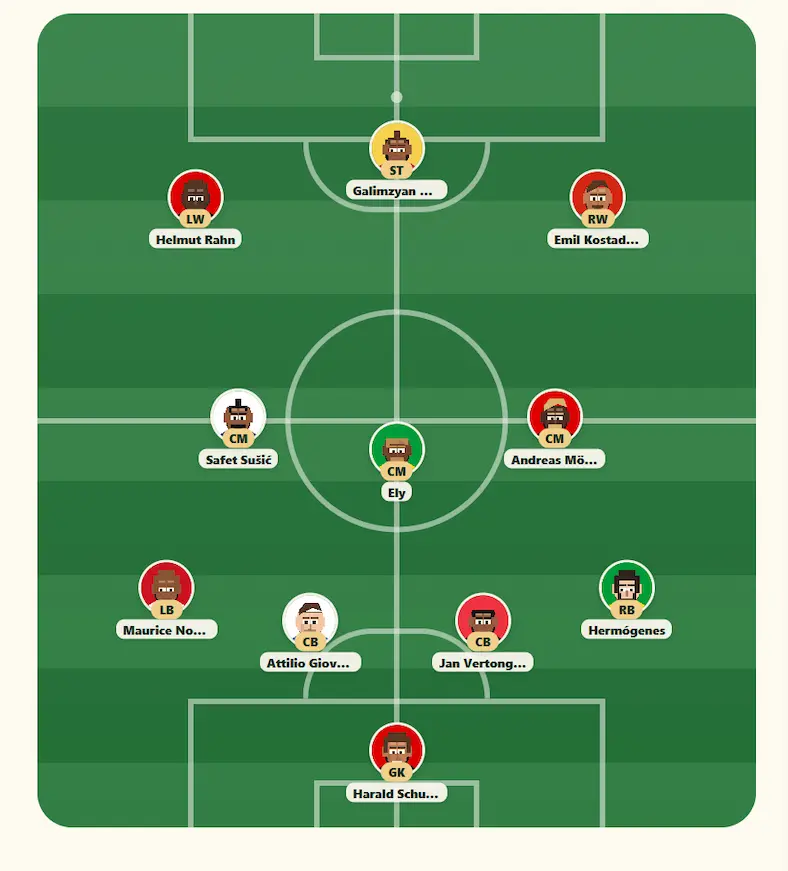
Classic is the cleaner mode. It gives you clearer strength cues, so the draft feels more readable and more immediate. If you are new to the site, want to test lineups quickly, or simply prefer a football game where information is easier to scan, Classic is the right entry point. It still rewards structure and good picks, but it lowers the cost of uncertainty.
Almanac hides ratings and changes the mood completely. Now the run depends more on memory, era knowledge, and your sense of how strong a player or squad really was in that tournament cycle. That makes the same 7a0 World Cup squad builder game feel more like a football memory test. Some players want a straight tactical draft; others want the uncertainty of recognizing a World Cup version of a player without the numbers doing the work for them. Keeping both modes gives the guide section a stronger identity and gives the page more than one type of football story to tell.
The contrast also helps explain why formation remains visible from the start. A 4-3-3, 4-4-2, 3-5-2, or 4-2-3-1 changes which player profiles matter most. A draft becomes much more replayable when tactics are not decorative. The same national team may feel completely different depending on whether your current XI needs a holding midfielder, a second striker, or a defender who can keep the structure from collapsing.
What matters
| Decision | What it affects | Why it matters |
|---|---|---|
| Formation | Open slots and role fit | A great player can still hurt the XI if the shape already has that role covered. |
| Mode | Information level | Classic gives clearer signals; Almanac makes memory and era knowledge more important. |
| Pool | Squad variety | Classic is curated and fast; Complete Pool adds more historic teams and stranger draws. |
| Simulation | Attack, defense, balance, fit | The run rewards teams that work as a football side, not just a list of names. |
A strong World Cup simulator should answer the question every draft creates: how far would this team actually go? Group stage exits, quarter-final runs, finalist finishes, and world champion outcomes all feel different when they grow out of the lineup you assembled. If your squad is balanced, the simulator should reward that. If your attack is electric but your back line is brittle, the run should expose that risk. If your team is full of big names but poor in structure, it should feel short of what the names promised.
That is what separates 7a0 from a static squad list or a shallow bracket page. Many people searching for a World Cup game do not only want to browse names; they want interaction, consequence, and replay value. The simulation turns picks into a story. It lets you compare one run against another and ask whether a different defender, a different midfield choice, or a different formation might have changed the outcome. In that sense, the site works as both a football game and a compact thought experiment about tournament football.
Because the simulator sits inside the same draft loop, every role becomes meaningful. Goalkeeper quality matters. Center-back reliability matters. Midfield balance matters. The best World Cup sides are usually remembered for star names, but they win because those stars sit inside a stable team. That is the principle the game tries to preserve in a faster, more playable form.
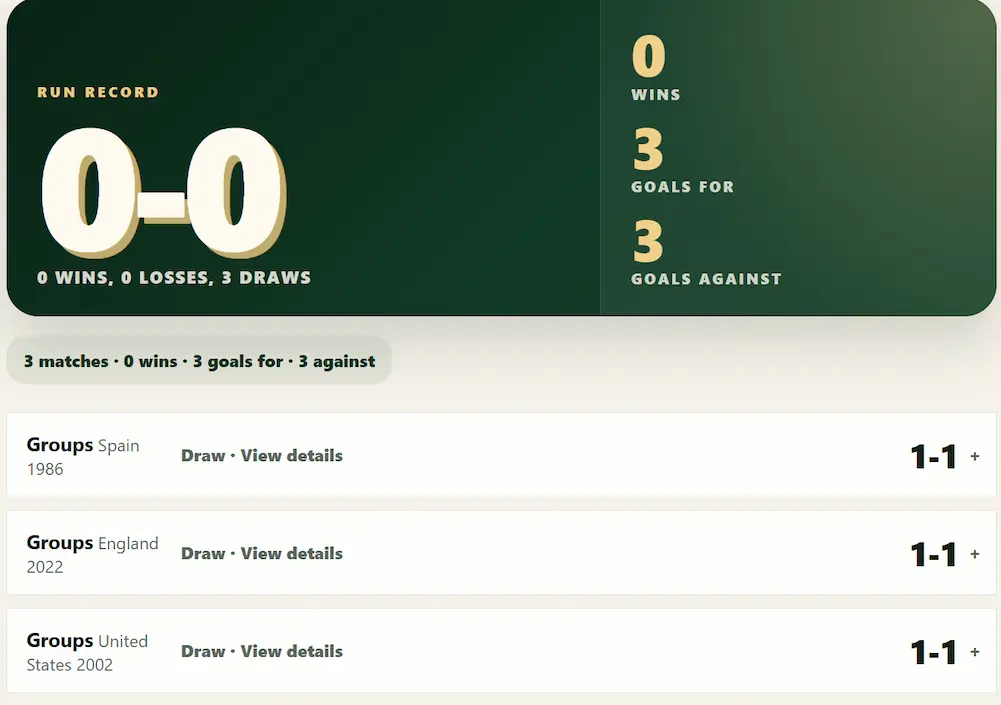
The strongest part of the product is that the squads carry real tournament identity. A World Cup teams game becomes much richer when the teams are rooted in actual history instead of generic stat cards. Brazil in one era does not solve the same tactical problems as Brazil in another era. Argentina in 1986 is not the same football question as Argentina in 2022. Italy, Germany, France, the Netherlands, Uruguay, Spain, England, Croatia, and smaller national sides all create different kinds of tension because their squads are remembered for different reasons.
That is why the phrase historic World Cup teams belongs on this page naturally. The history is not decoration. It is the foundation of the 7a0 puzzle. One run may be built around title-winning squads. Another may lean into outsiders, cult heroes, and one-tournament peaks. That variety is what gives an infinite football draft game real replay value. You can chase a balanced tactical team in one run, a riskier attacking side in another, or a full Almanac challenge where memory does most of the work.
The long horizon matters too. Interest around the 2026 World Cup will keep growing, and a game that already understands historic squads, tactical tradeoffs, and tournament outcomes is in a much better position to support 2026 World Cup teams or even a future 2026 World Cup simulator mode. That future angle only works because the core loop already has a clear identity: roll, evaluate, build, and simulate. The promise stays simple even as the content grows.
FAQ
It is a football game where you build a World Cup XI from historic national teams.
It unlocks every available World Cup squad instead of the curated Classic Pool.
Candidate strength is hidden, so picks depend more on football memory and squad knowledge.